

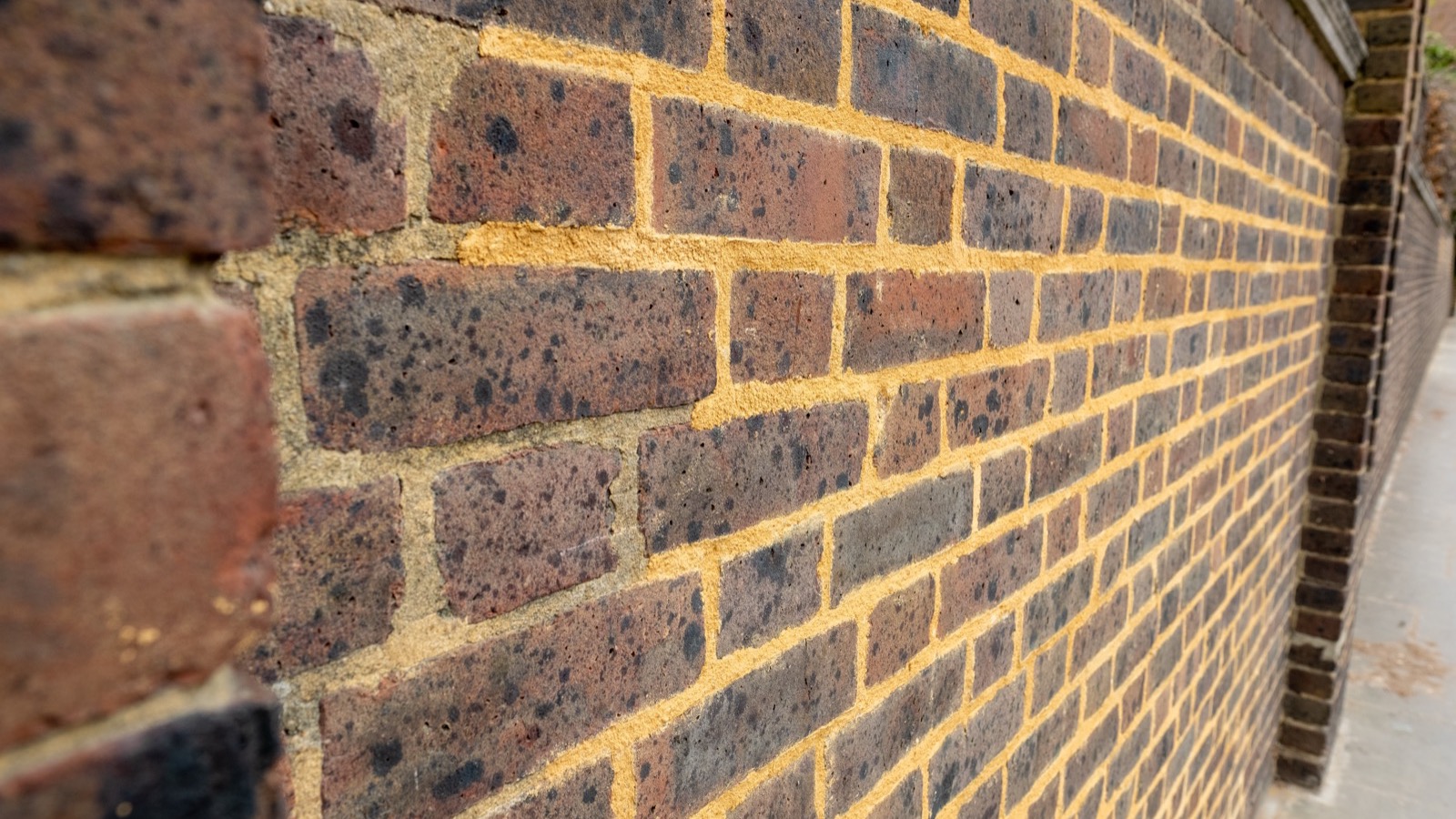
Brick Repointing and Brick Repair in Baltimore, MD
Failing mortar joints are the most common masonry problem in Baltimore, and the reason is structural to the city. Roughly 125,500 of its 251,000 occupied homes are attached rowhouses, most of that brick is 70 to 150 years old, and the joints have reached the end of their service life. Charm City Masonry handles the brick repointing Baltimore rowhouses need, with mortar matched to the age of the wall, not to whatever bag is on the pallet. For masonry repair Baltimore City and Baltimore County owners can rely on, start with a free look.
Licensed, insured and bonded.
01
How to Tell if Your Brick Needs Repointing
You can diagnose most of this yourself, with a screwdriver and a look from the sidewalk.
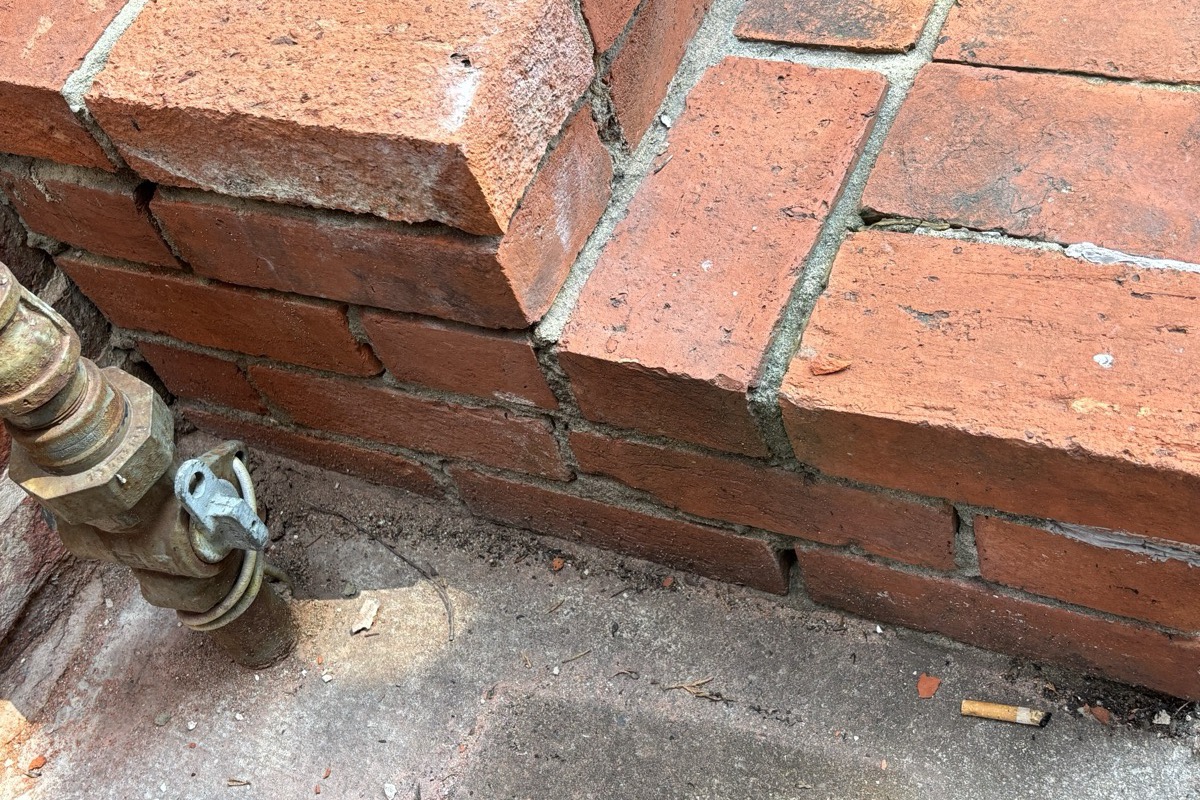
- The screwdriver test. Sound mortar resists a blade or thumbnail; failed mortar scrapes out in crumbs.
- Sand at the base of the wall, where mortar has broken down into sand.
- Recessed joints, more than about a quarter inch behind the brick face, holding water.
- Daylight or a draft through a joint, a direct path for water.
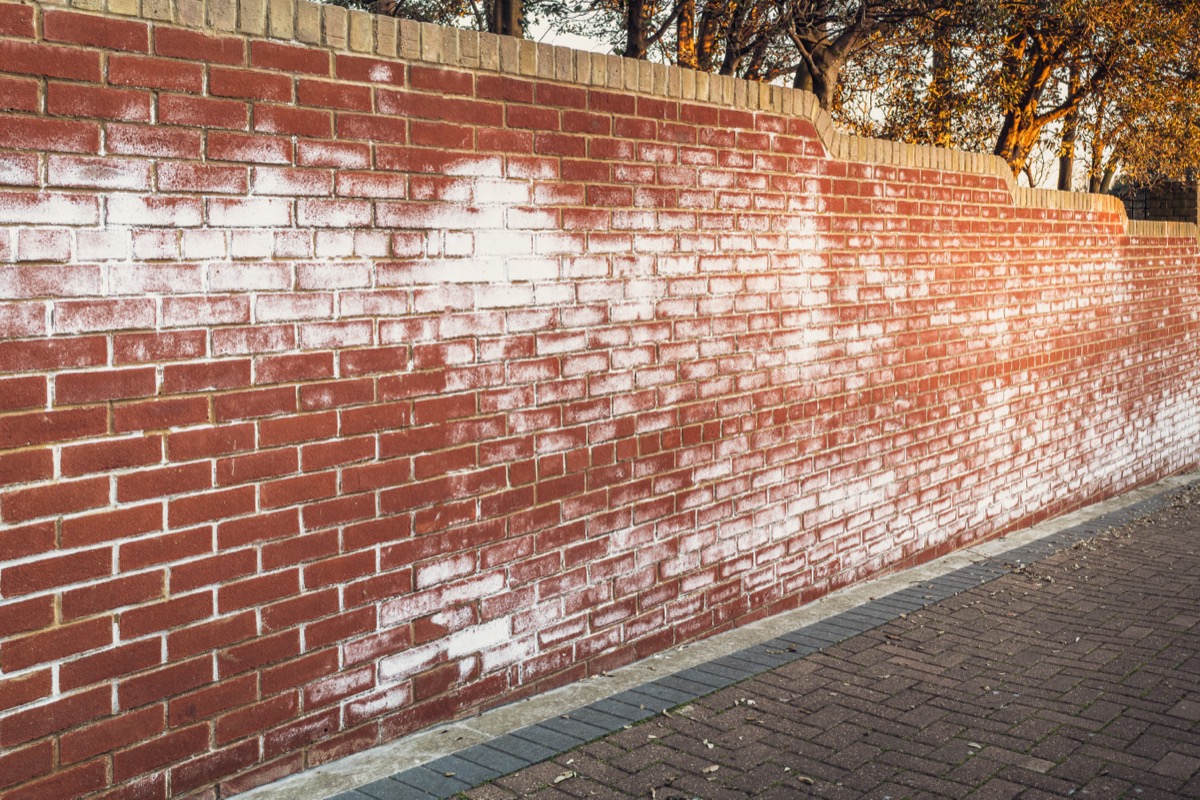
- Efflorescence, the white chalky bloom left when salt-bearing water dries on the brick face.
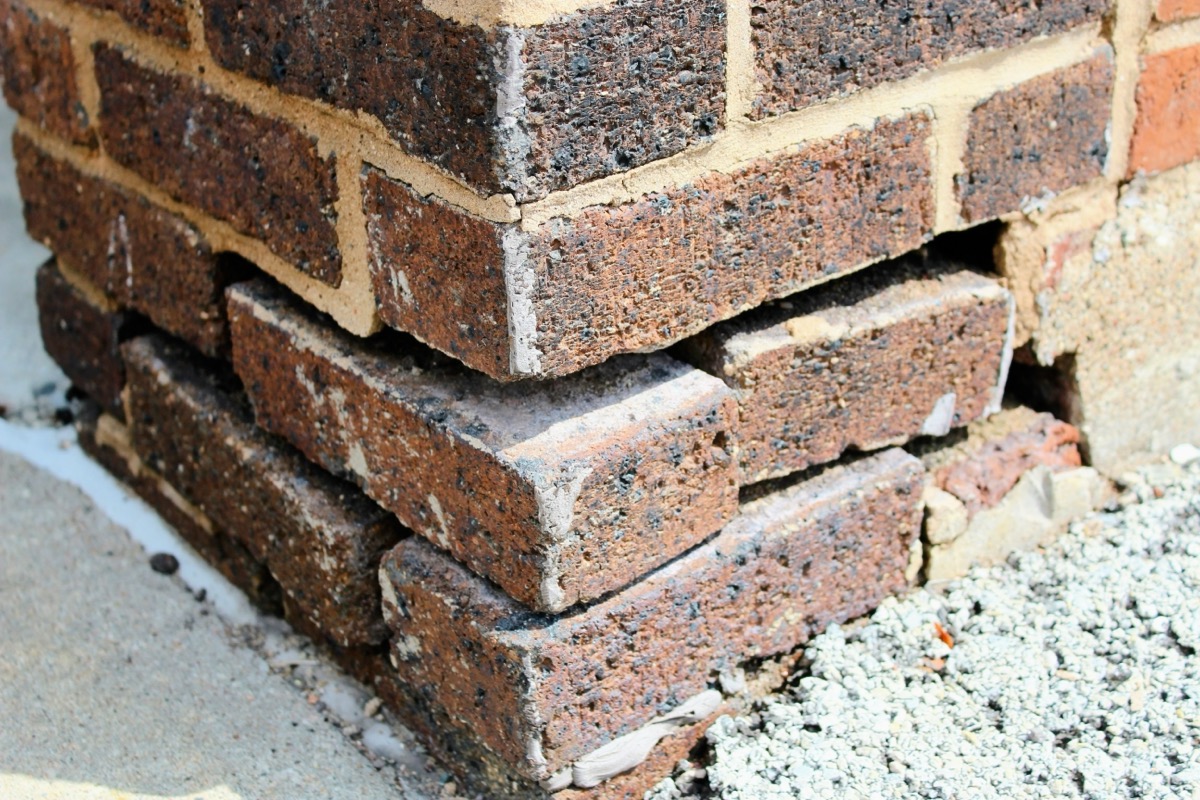
- Spalled brick: faces flaking, popping or crumbling, often from an earlier repoint in hard mortar.
- Stair-step cracking through the joints, from settlement or a rusting steel lintel.
- Damp patches inside on an exterior wall after driving rain.
Joints fail from the top down and on the weather side first: look hardest at south and west elevations and under overflowing gutters. Catch it there and you have a pointing job, not the brick repair Baltimore MD rowhouses need later.
Not sure what you are looking at? Send us a photo and we will tell you what it is. Call (410) 844-6510.
02
Repointing, Tuckpointing, Pointing: What the Words Actually Mean
Repointing is the actual repair: cutting deteriorated mortar out of the joints to a sound depth and packing in a compatible mix.
Tuckpointing, strictly speaking, is decorative: two mortars of contrasting color used so irregular brick reads as though it had fine joints. In American usage the word drifted, and most homeowners searching tuckpointing Baltimore are describing repointing. We use both words the way our customers do.
Pointing is the original mortar finish on new masonry. Searches for brick pointing Baltimore are almost always repointing questions on a century-old wall.
One distinction matters more than vocabulary: grinding versus hand-cutting. An angle grinder is fast, but on a soft old joint it over-cuts and nicks the arris, the crisp edge of the brick. Soft brick gets cut by hand.
03
The Mortar Matters More Than the Mason
Mortar is meant to be the sacrificial part of a masonry wall, and that one idea decides whether a repoint protects your brick or ruins it. The National Park Service standard, Preservation Brief 2, puts it plainly: stresses should be relieved by the mortar rather than by the masonry units. Mortar stronger than the brick will not give, so the stress goes through the brick instead. Joints are cheap; brick faces are not.
Historic mortar is lime, not cement. The traditional mix is about 1 part lime putty to 3 parts sand. Portland cement was not in common use here until the early twentieth century, and by the 1930s the standard was equal parts cement and lime. So brick laid before about 1900 sits in nearly pure lime mortar, 1900 to the 1930s is transitional, and later work is cement rich.
Here is what goes wrong. Repoint soft old brick with modern bagged mortar and four things follow: movement is forced through the brick and it cracks; water cannot evaporate through the joint, so pressure pops the face off; salts crystallize inside the brick instead of at the joint face; and trapped water freezes and spalls it.
The visual signature of a wrong mix is hard joints standing proud of eroded, crumbling brick faces. Not reversible: spalled brick has to be cut out and replaced.
The mixes. Brief 2 recommends Type "L" (0 cement : 1 lime : 3 sand) for soft hand-made brick in sheltered exposure, Type K (1:3:10) for moderately durable stone, Type S (1:1.5:4.5) only for very durable granite. Historic Baltimore brick sits near the bottom of that scale, so the Type N and Type S bags at every supply house are far too hard. We match on strength, sand color and grain, and profile.
04
Baltimore's Brick, by Era
You can usually date a Baltimore wall from the brick alone, and the date tells you the mix.
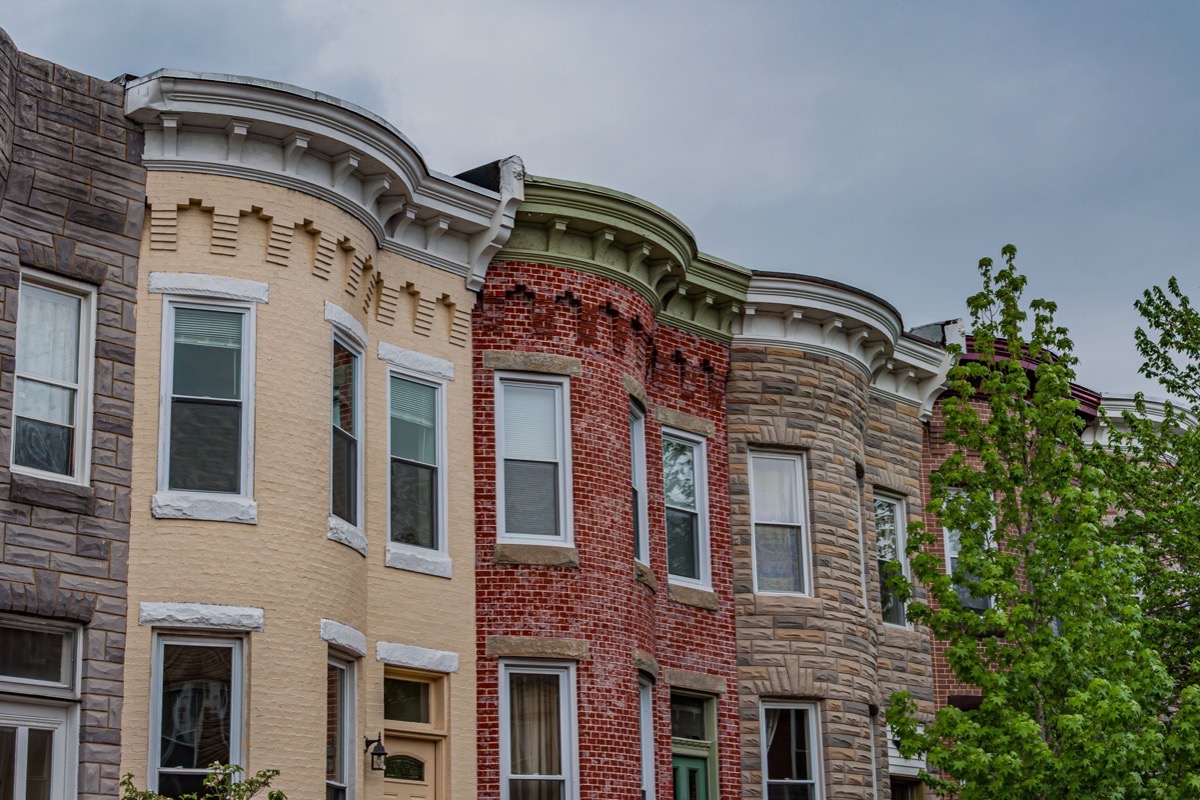
Pre-1850s salmon brick. Soft and porous, fired from south Baltimore clay, so porous it was routinely painted. It survives in the oldest pockets of Fells Point, Federal Hill and Ridgely's Delight, and it is the city's most fragile brick.
1850s onward, pressed brick. Harder, tighter joints, often with a fine white struck line. Bolton Hill, Mount Vernon and Union Square are full of it.
1890s to 1900s Roman brick. Narrow, hard, yellow-brown, iron-spot or vitrified, sold as brick that never needs painting.
1930s onward. Red brick returns with Colonial Revival, and the mortar behind it is already cement rich.
Reading that correctly is most of the brick restoration Baltimore rowhouses need. A wall from 1880 and one from 1955 can look alike and want completely different mortar.
05
Formstone: What's Underneath and What Removal Actually Costs You
Formstone was patented in 1937 by L. Albert Knight of Baltimore's Lasting Products Company and went up across the city from the 1940s through the 1960s. Baltimore became the Formstone capital of the world; John Waters called it the polyester of brick.
How it is built. Three coats of cement stucco over perforated metal lath nailed into the brick, the top coat sculpted into stone shapes and scored to fake joints.
Why it damages brick. The lath separates from the brick and moisture gets trapped in the gap. Over porous nineteenth-century brick that means cracking, spalling, efflorescence and loosened joints, accelerated by freeze-thaw. It also buried the cornices, belt courses, lintels and sills built to shed water.
Removal is destructive, and you should hear that before you sign anything. Pulling it off pock-marks the brick face where the lath was nailed. What follows is cleaning, extensive repointing and usually brick replacement. Removal is the cheap part; the brick facade repair Baltimore homeowners pay for is everything after it.
Sometimes the right answer is to leave it in place. If the Formstone is sound and the brick behind it is soft salmon brick, removal can cost more than the house gains and trade a stable wall for a fragile one. We will tell you honestly which you have.
06
What Brick Repair Covers
Brick repair services Baltimore property owners call about run from one cracked unit to a rebuilt parapet. Here is the range of work, on the brick masonry Baltimore City and Baltimore County homes are built from.
- Repointing and tuckpointing, full elevations or spot work.
- Brick replacement, matching size, color and texture from salvage where we can.
- Structural crack repair: stitching, helical ties and rebuilt sections.
- Lintel replacement, including rust-jacking damage above a failed steel lintel.
- Sill, coping and cornice repair.
- Chimney breast pointing, alongside our chimney repointing and rebuilds.
- Garden and retaining wall repointing.
- Parapet rebuilds. The top courses take the worst weather.
- Brick veneer repair: corroded ties, blocked weep holes (the openings that drain a veneer wall), rusting shelf angles.
Some of that is brick wall repair Baltimore weather has caused over decades. Some is brick and mortar repair Baltimore City inspectors flag on a storefront, which we handle through our commercial repointing and facade work.
Stone Repointing
We repoint stone as well: garden walls, rubble foundations and stone facades. The mixes go softer still, and joint profile matters more here, because stone joints are wider and less regular.
07
Our Repointing Process
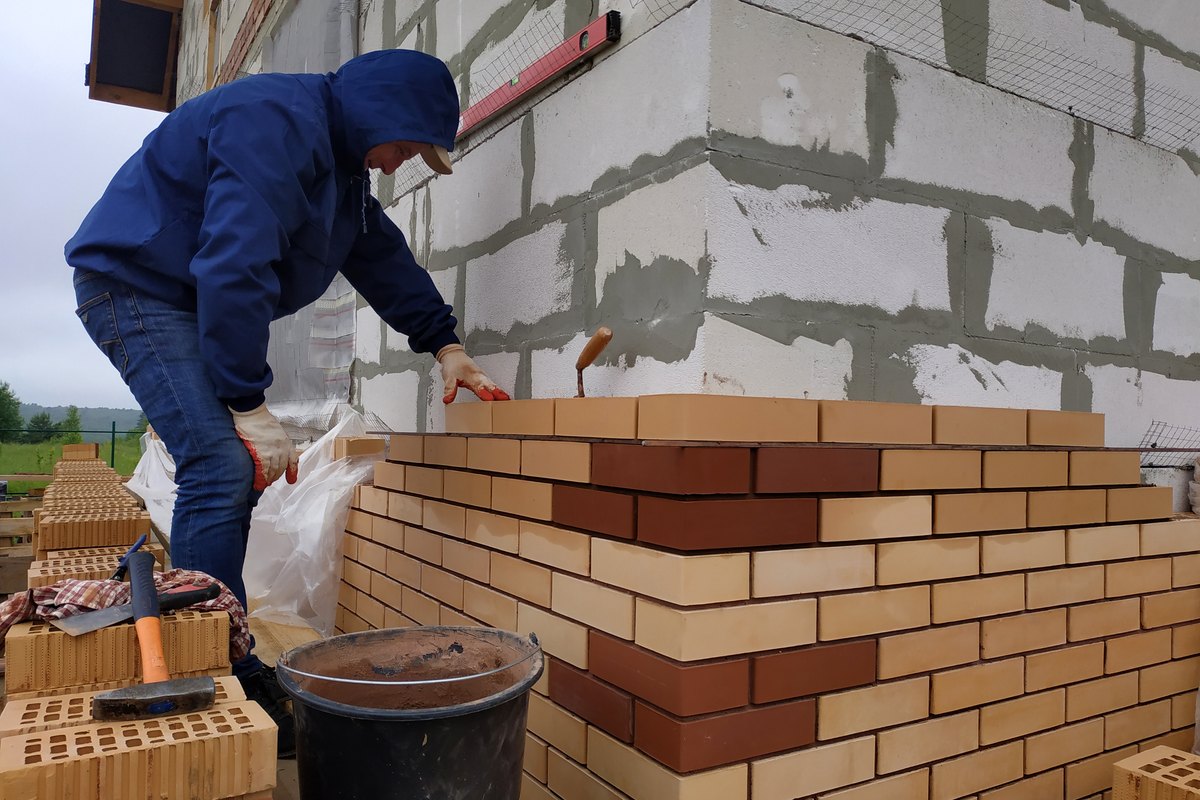
There is no shortcut to repointing brick Baltimore MD winters have worked on for a century. Seven steps, every time.
- 01Assessment. Date the wall, identify the brick, test the mortar, find the water source. Repointing while a gutter still dumps on the wall wastes money.
- 02Mortar match. Strength to suit the brick, then sand color and grain matched so the work does not read as a patch. This is where the brick restoration Baltimore rowhouses deserve either succeeds or fails.
- 03Cutting out. Joints cut to a sound depth, generally two to two and a half times the joint width, square-backed, not feathered. Hand tools on soft brick.
- 04Cleaning and pre-wetting. Dust brushed out, joints dampened so the brick does not pull water from fresh mortar.
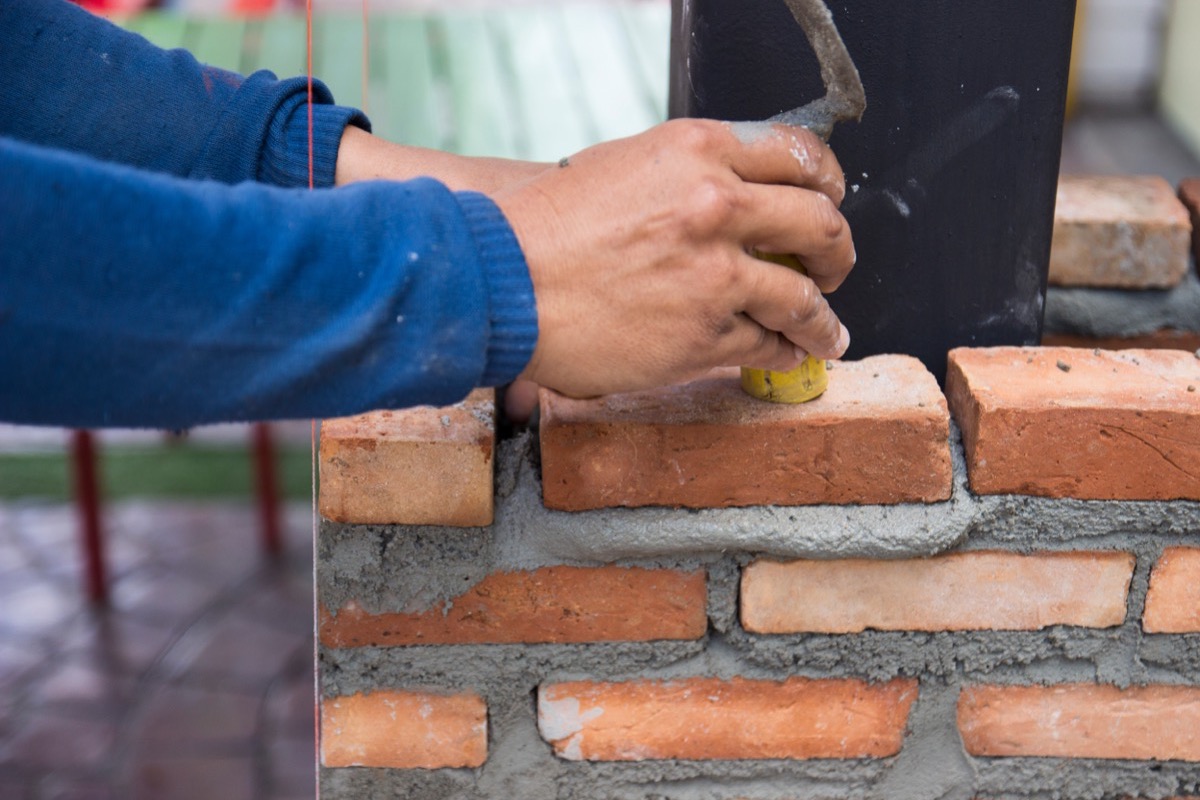
- 05Filling in lifts. Deep joints packed in layers, each set before the next, not stuffed in one pass.
- 06Tooling. Joint profile matched to the original: struck, concave, raked, weathered or flush.
- 07Cleanup and cure. Protection from sun, rain and frost while the mortar cures, and a clean site each day.
08
Why Baltimore Is Hard on Mortar
Baltimore sits on the wet side of the national average: about 45 inches of precipitation across roughly 121 wet days a year, humidity from 59% in spring to 71% in early fall. Walls stay wet longer and dry more slowly than in most of the country.
Then temperature works on that water. We get 75 to 90 days a year below freezing, with January averaging 34 degrees and lows near 25. A winter that thaws every afternoon does more damage than one that stays hard frozen.
Road salt finishes the job. Maryland stocks hundreds of thousands of tons of rock salt and over a million gallons of brine each winter, and chloride splashes onto the bottom few feet of walls near a street. That drives subflorescence, salt crystals growing inside the brick's pores rather than on the surface and breaking it apart from within. Which is why vapor-permeable mortar matters more here than almost anywhere.
09
Rowhouse Neighborhoods We Work In
We work throughout Baltimore City and Baltimore County. In the city, the brick repointing Baltimore rowhouse owners call us for clusters in the older districts: Fells Point, Federal Hill, Bolton Hill, Union Square, Butchers Hill, Ridgely's Delight, Reservoir Hill and Highlandtown. Each has its own brick and era, which is why we date a wall first.
In the county the stock is different but the problems rhyme. We cover Catonsville, Towson and Dundalk among others, where 1940s and 1950s brick is at prime pointing age. Read more about our crews.
10
Frequently Asked Questions
What is brick repointing?
What is the difference between repointing and tuckpointing?
How often does brick need to be repointed?
How much does brick repointing cost in Baltimore?
How long does repointing last?
Is repointing brick difficult? Can I DIY it?
Can brick be repointed in cold weather?
Can you match my existing brick and mortar color?
Do you also do brick steps and walkways?
How do I choose a repointing contractor?
Free estimate
Get a Free Estimate on Brick Repair in Baltimore
Let us come and look. We will tell you what is failing, why, and what the wall needs, then put it in writing so you can compare line by line. Estimates are free. We are licensed, insured and bonded, and we stand behind our work. For brick repair Baltimore City and Baltimore County owners can trust, call us.
Short form: Name, Phone, Email, Address or ZIP, "What's going on?" (message box), photo upload.